

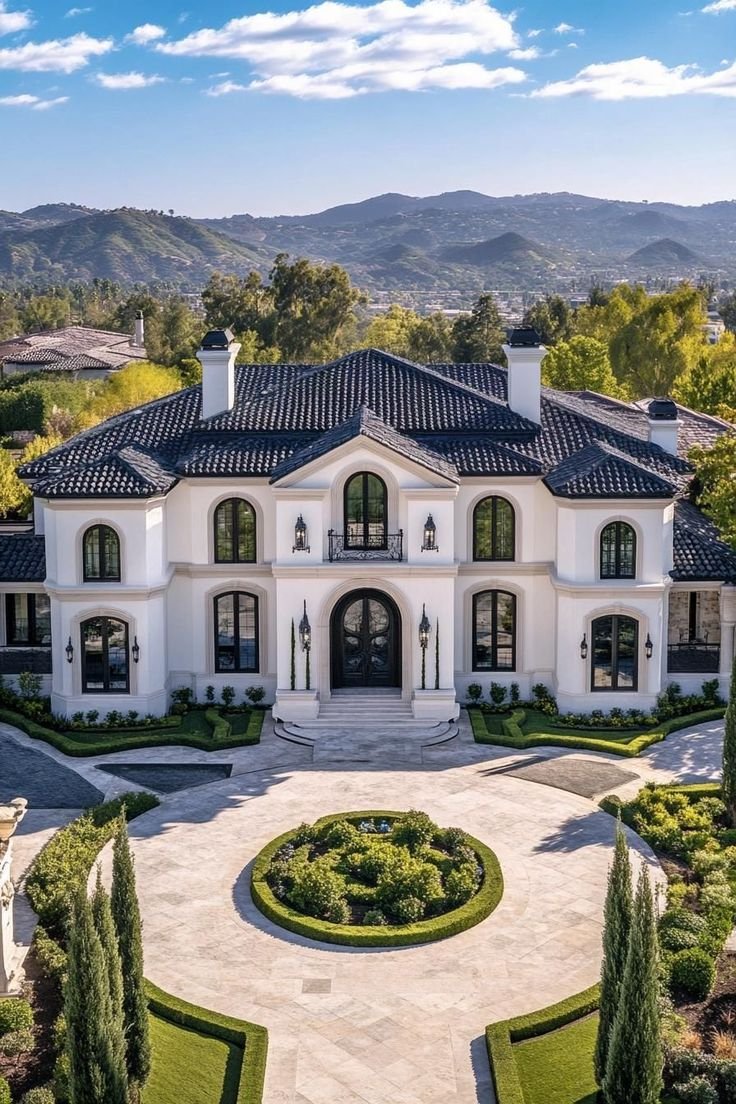
In the American luxury property market, a house can be much more than a place to live. At the very top end, properties are designed as private worlds, with enormous grounds, pools, guest houses, wellness spaces, entertainment rooms, private docks and architecture that would not look out of place in a five-star resort.
And in 2026, some of the prices being asked for these homes are extraordinary.
One of the biggest examples is a Bel-Air estate in Los Angeles that has been listed for $400 million, making it one of the most expensive homes ever offered publicly in the United States. The property at 11201 Chalon Road is described as a roughly 70,000-square-foot compound on 7.86 acres, with 39 bedrooms and multiple pools. (Forbes)
But Los Angeles is not the only American market where luxury homes are reaching extraordinary price levels.
When a Home Becomes Its Own World
At this level of the market, buyers are not simply looking for more bedrooms.
They are looking for privacy, space, architecture and experiences that cannot easily be found elsewhere.
That can mean a home with its own wellness facilities, entertainment areas, landscaped grounds, guest accommodations and direct access to water. For some buyers, the property itself becomes a destination.
A good example can be found in Bellevue, Washington.
A waterfront estate in Hunts Point has recently been listed for $71 million after its owners spent nearly two decades creating what they describe as their own Four Seasons-style retreat. The 2.3-acre Lake Washington compound includes two homes, two docks, a koi pond and extensive wellness and entertainment features. (The Wall Street Journal)
The story behind the property is almost as interesting as the asking price. Its owners reportedly invested about $50 million into creating the estate.
That is a very different approach to buying a house.
It is closer to creating a private resort.
Dallas Is Joining the Conversation
Texas has also become an important part of America’s luxury property story.
In Dallas, a newly completed 13,800-square-foot mansion known as Casa de Ondas recently entered the market at $45 million.
The property sits within the exclusive Crespi Estate in Preston Hollow and was designed by South African architecture firm SAOTA. Its features include an underground speakeasy, wine cellar, golf simulator, high-end gym, large outdoor areas, a custom pool and sports courts. (Chron)
There is another remarkable property nearby as well: a roughly 27,000-square-foot mansion formerly owned by Tom Hicks has been listed for $64 million. (Chron)
These properties show how the definition of luxury continues to expand.
A luxury home is no longer simply about having an impressive interior. Buyers at this level can expect the property to offer an entire lifestyle.
Florida’s Waterfront Luxury
Florida remains another major destination for America’s wealthiest homebuyers, particularly those looking for waterfront property.
One of the most talked-about examples is Gordon Pointe, a large waterfront estate in Naples’ Port Royal neighborhood.
The property has returned to the market at $195 million, following a substantial reduction from its previous $295 million asking price. The estate covers approximately 5.39 acres and includes significant waterfront access and a private harbor. (The Times of India)
The property also illustrates something important about the ultra-luxury market.
A huge asking price does not necessarily mean a quick sale.
Even extraordinary homes have to find the right buyer, and today’s wealthy purchasers can be selective about location, property design and long-term considerations.
The Architecture Matters
At the very top of the market, architecture has become part of the property’s identity.
Buyers are often looking for homes that feel different from anything else they could purchase.
That is why historic architecture, famous designers, unusual locations and highly customised interiors can have such an important role in luxury real estate.
The market is also not limited to newly constructed mansions.
In Michigan, a rare Frank Lloyd Wright-designed home known as the Samuel and Dorothy Eppstein House has returned to the market for $2.1 million. Built in 1953, the approximately 2,500-square-foot home was extensively restored and is part of Wright’s planned community known as The Acres. (New York Post)
It is a much smaller property than the mega-mansions in California, Florida or Texas, but its architectural history gives it a different kind of value.
That is an important part of luxury real estate: expensive does not always mean enormous.
Sometimes, rarity is the luxury.
Why the American Luxury Market Remains So Diverse
The United States does not have one luxury housing market.
It has many.
Los Angeles attracts buyers looking for privacy, large estates and proximity to the entertainment industry. New York offers ultra-luxury apartments with views, security and access to one of the world’s most important cities. Florida attracts buyers interested in waterfront living and a warmer climate. Texas offers large private estates and increasingly ambitious new developments.
Mountain destinations are also commanding attention.
In Park City, Utah, a new home recently sold for $37 million, setting a record for the city’s most expensive residential sale. The nine-bedroom, approximately 17,000-square-foot estate includes a heated outdoor pool and 11 fireplaces and sits within the Bald Eagle Club in the Deer Valley area. (The Wall Street Journal)
The variety is striking.
A luxury buyer in Manhattan may want a penthouse high above Central Park. Another buyer may want several acres of land in Texas. Someone else may be looking for a waterfront compound in Florida or a mountain retreat in Utah.
Luxury means something different to each of them.
The New Meaning of Privacy
One theme appears repeatedly across America’s highest-priced homes: privacy.
For many wealthy buyers, privacy is no longer simply a preference. It is one of the most valuable features a property can offer.
Large grounds, gated entrances, private docks, guest houses and carefully designed outdoor spaces allow homeowners to create separation from the outside world.
This is particularly visible in properties built around expansive land rather than simply square footage.
The most desirable homes are increasingly being designed to give residents everything they need without having to leave the property.
That might mean a gym, cinema, pool, office, entertainment space, wellness area, sports court or even a separate guest residence.
The result is a home that functions almost like a private hotel.
What Buyers Are Really Paying For
It is easy to look at a $100 million or $400 million asking price and focus only on the number.
But the value of these properties comes from a combination of factors.
Location is one.
Land is another.
Architecture, views, privacy, history, construction quality and the ability to customise the property all matter.
And then there is something that cannot easily be measured: scarcity.
There are many expensive houses in America.
There are very few homes that offer a particular combination of location, architecture, land and privacy.
That is where the ultra-luxury market becomes different from ordinary real estate.
The buyer is not simply comparing bedrooms and bathrooms.
They are buying something that may not exist anywhere else.
A Market Built for the Exceptional
America’s most expensive homes tell us something about how luxury itself is changing.
The wealthiest buyers are still interested in beautiful houses, but they are increasingly looking for complete experiences.
A waterfront estate can become a private retreat. A mountain home can become a year-round destination. A city penthouse can provide privacy while keeping the owner in the centre of everything.
And a historic home can offer something that money alone cannot recreate: a connection to architectural history.
The numbers may attract attention, but the real story is what those numbers are buying.
Space.
Privacy.
Design.
Location.
Freedom.
And, perhaps most importantly, something that feels completely personal.
That is why America’s ultra-luxury property market continues to attract attention. At the highest end, these are no longer simply houses on the market.
They are one-of-a-kind pieces of real estate, built for people who want their home to be unlike anything else.