As global luxury growth becomes harder to secure, the United States is emerging as one of the industry’s most important battlegrounds. But what makes American consumers so valuable to luxury brands?
Luxury fashion is entering a period of recalibration.
After several years of rapid growth, the global luxury industry is facing slower demand, changing consumer priorities and increasing pressure to justify premium prices. Yet amid that uncertainty, luxury companies are continuing to look toward one market in particular: the United States.
According to McKinsey & Company’s 2026 luxury research, the US remains the world’s largest luxury market by sales, while the US and China together represent the industry’s largest concentrations of luxury demand.
That position is encouraging luxury brands to rethink how they attract American consumers, with investment increasingly moving beyond traditional stores and products toward experiences, exclusivity and deeper customer relationships.
America Still Has the Spending Power
The attraction of the US market begins with its enormous concentration of affluent consumers.
Even as economic conditions remain uncertain, spending among higher-income Americans has shown resilience. Recent US retail data also points to continued consumer activity, with retail sales rising 1.2% in August 2026.
For luxury companies, the significance is not simply the size of the American population. It is the combination of wealth, purchasing power and the country’s established luxury ecosystem.
New York, Los Angeles, Miami and other major cities provide luxury houses with dense concentrations of affluent consumers, international visitors and high-end retail destinations.
Luxury Brands Are Expanding Their Physical Presence
The renewed interest in the US is visible in retail investment.
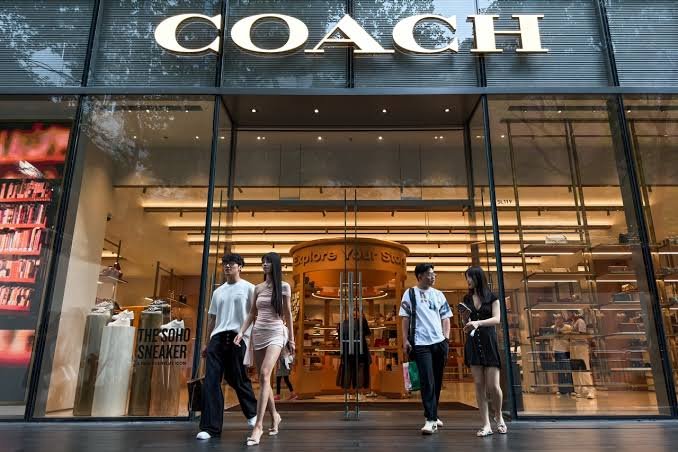
McKinsey’s State of Fashion 2026 reported that luxury retail square footage in the US increased 65% during the first half of 2025, reversing a decline recorded the previous year.
That expansion reflects a broader change in how brands view physical stores.
For luxury companies, a flagship location is no longer simply a place where a customer completes a transaction. It can function as a brand experience, a community space and a way to communicate craftsmanship and identity.
The strategy is also visible beyond traditional luxury houses. Inditex, the parent company of Zara, is planning additional US stores in cities including Denver, Phoenix and Pittsburgh, while expanding its other brands in New York.
American Luxury Consumers Are Changing
There is another reason brands are paying closer attention to the US: the definition of luxury itself is changing.
McKinsey’s 2026 research found that emotional connection has become a major driver of luxury desirability among consumers in both the US and China.
In the US specifically, consumers showed a stronger preference for newer and disruptive brands than for established luxury houses when it comes to reflecting their identity.
That creates both an opportunity and a challenge for traditional European luxury brands.
Heritage alone may no longer be enough.
American consumers increasingly expect brands to feel culturally relevant, distinctive and connected to their lifestyles.
Exclusivity Is Becoming More About Access
Luxury has traditionally been associated with scarcity.
But the modern luxury consumer may be looking for something different: access.
McKinsey’s research found that US luxury consumers place significant value on early access to collections, limited editions and membership-style benefits.
That is changing how brands approach exclusivity.
Instead of simply making products difficult to obtain, companies are increasingly creating private experiences around them — from exclusive events and early product access to personalized services and communities.
The objective is to make customers feel that they are part of an inner circle rather than simply purchasing an expensive product.
Luxury Is Competing With Experiences
Perhaps the biggest challenge for luxury brands is that they are no longer competing only against other luxury brands.
They are competing against travel, wellness, hospitality and other experiences for consumers’ discretionary spending.
McKinsey’s research found that travel ranks as the top choice for additional discretionary spending among luxury consumers in both the US and China.
That helps explain why luxury companies are increasingly investing in experiences.
A handbag can communicate craftsmanship and status. A private travel experience can create a memory.
For brands, combining the two can create a stronger relationship with customers.
The Luxury Market Is Not Without Challenges
The US opportunity comes at a complicated moment for the industry.
Global luxury growth has slowed, and consumers have become more selective after years of price increases. McKinsey estimates that around 80% of luxury market growth between 2023 and 2025 came from price increases rather than volume growth.
That strategy has limits.
A higher price does not automatically create greater desirability. Consumers increasingly want stronger craftsmanship, creativity, service and experiences to justify the cost.
At the same time, some aspirational consumers are reducing or delaying luxury purchases as prices rise.
This means brands are having to become more precise about whom they want to attract.
Why America Matters More Than Ever
For luxury companies navigating a slower global market, the United States offers something particularly valuable: scale combined with significant purchasing power.
But winning American consumers may require more than opening more stores.
The next phase of luxury in the US is likely to be defined by experience, emotional connection, exclusivity and relevance rather than simply logos and price tags.
The brands that succeed will have to convince consumers that their products offer something worth paying for, and something worth belonging to.
So, why are luxury brands betting bigger on America?
Because even as the global luxury market becomes more challenging, the United States remains one of the world’s deepest pools of luxury demand — and brands see an opportunity to turn that demand into lasting relationships rather than one-time purchases.